If you have ever wondered how biltong is made, the honest answer is that it is cured and air-dried, never cooked. Traditional biltong starts with a good lean cut, gets a vinegar-and-spice cure, and then hangs to dry slowly in cool, moving air until it firms into dense, protein-packed slices. No oven, no smoker, no shortcut, and that is exactly what makes it different from most snacks on the shelf.
The short version: how biltong is made
At its core, how biltong is made comes down to three moves: cut, cure, and dry. You take lean beef, coat it in a cure built around vinegar, salt and spice, then let it hang in cool, moving air for days until the moisture drops and the flavor concentrates. Everything else is refinement. If you want the wider picture first, our guide to what biltong actually is covers where the snack comes from and why it earned a following well beyond South Africa.
The process reads simply because biltong was born as a preservation method, long before refrigeration. Vinegar and salt make the meat inhospitable to spoilage, and slow drying finishes the job. Done well, the result keeps for weeks and packs more protein per bite than almost anything you can carry.
Step 1: Choosing and cutting the beef
Good biltong lives or dies on the cut. You want lean, well-trimmed muscle with the grain running in one clear direction. Fatty cuts turn rancid faster because fat does not cure the way muscle does, so most makers trim aggressively and stick to cuts like silverside, topside or rump.
- With the grain, not against it. Biltong is sliced or hung along the grain so it dries evenly and pulls apart into that signature chew.
- Thickness is a choice. Thicker pieces stay moist in the middle and take longer to dry; thinner slices firm up fast and lean drier. Neither is wrong, they are simply different textures.
- Trim the fat. A thin cap of fat is fine and adds flavor, but heavy marbling is usually removed.
The beef itself matters as much as the knife work. Leaner, well-raised cattle give a cleaner, beefier result, which is one reason we build ours on single-origin Thai-French Charolais beef rather than a commodity blend.
Step 2: The vinegar-and-spice cure
This is the step that separates biltong from jerky. Before anything dries, the meat is bathed in vinegar and then coated in a dry cure. The classic mix is salt, coarse black pepper and toasted coriander seed, sometimes with a little extra spice depending on the maker.
Here is why each part earns its place:
- Vinegar lowers the surface pH, tenderizes slightly, and protects the meat through the slow dry. It is also where a lot of the tang comes from.
- Salt draws out moisture and is the backbone of preservation. This is worth knowing if you watch your sodium, because biltong is a genuinely salted, cured food.
- Coriander and pepper are the traditional flavor signature. Toasting the coriander first wakes up its citrus-like aroma.
The meat then rests in this cure for several hours to overnight, long enough for the vinegar and salt to penetrate. No sugar is required to make biltong taste good, which is why a clean version skips it entirely.
Step 3: Air-drying, low and slow
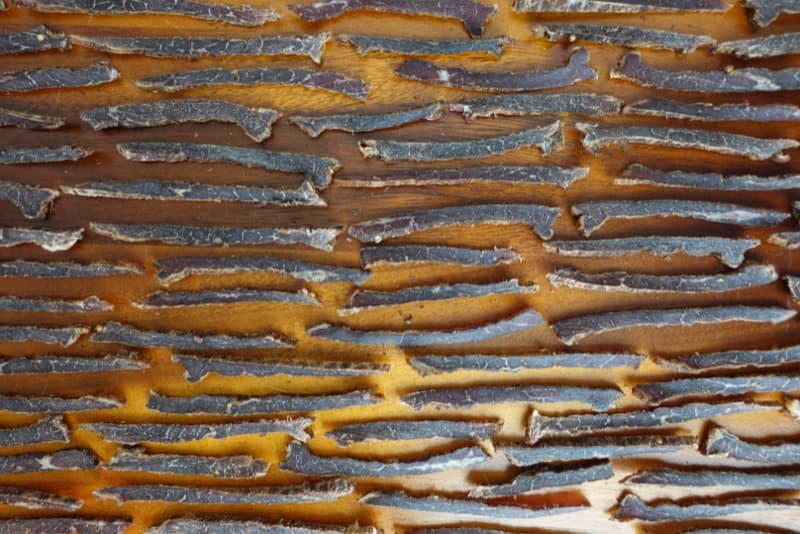
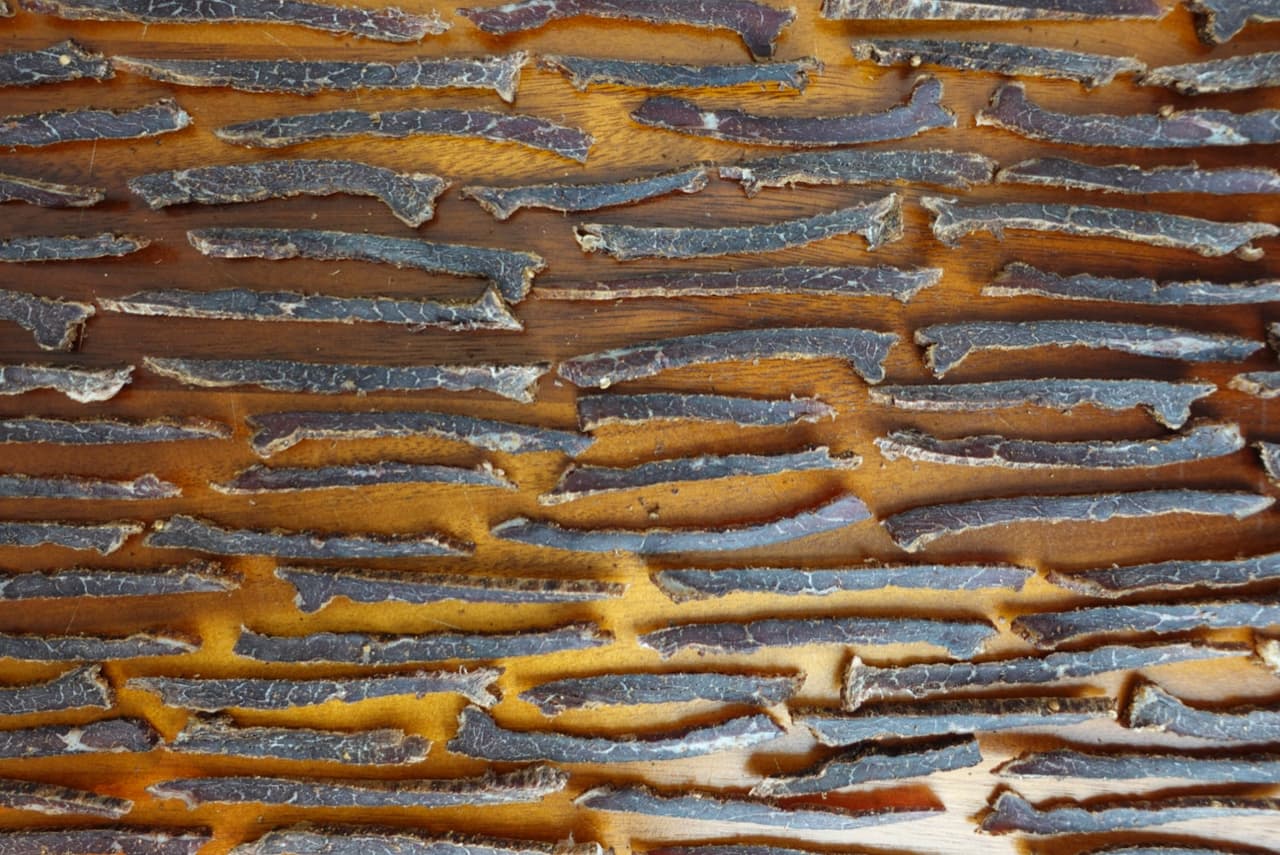
Now the defining step: the cured strips hang in cool, dry, moving air. Not heat, air. A gentle draft pulls moisture off the surface while the inside slowly equilibrates, and over three to seven days, sometimes longer, the meat loses roughly half its weight in water.
Temperature is kept low on purpose. Push the heat up and you are no longer making biltong, you are effectively cooking it, which changes the texture and can drive off the delicate cured flavor. This is the whole ballgame, and it is worth understanding the difference between air-drying versus machine dehydrating, because the method genuinely changes the final snack.
A few things patient drying gets right:
- Even moisture loss, so the outside is not leathery while the center is still wet.
- Concentrated, beef-forward flavor instead of a cooked, roasted note.
- A firm-but-yielding chew rather than the hard snap of an over-dried stick.
Why the method matters for protein, texture, and flavor
Because biltong is never cooked at high heat, the protein stays dense and intact and simply concentrates as the water leaves. A 50g serving lands somewhere around 25 to 30g of protein, which is a big reason it has a following among people who train and travel. Biltong is still a salted, cured food, so portion it sensibly, but as protein per bite goes it is hard to beat.
The low-heat method also protects flavor. High heat pushes meat toward a uniform cooked taste; slow air-drying lets the cure, the beef and the spice stay distinct. You taste the coriander, the pepper, the tang of the vinegar and the meat itself, all at once.
How Hell Meat makes its biltong
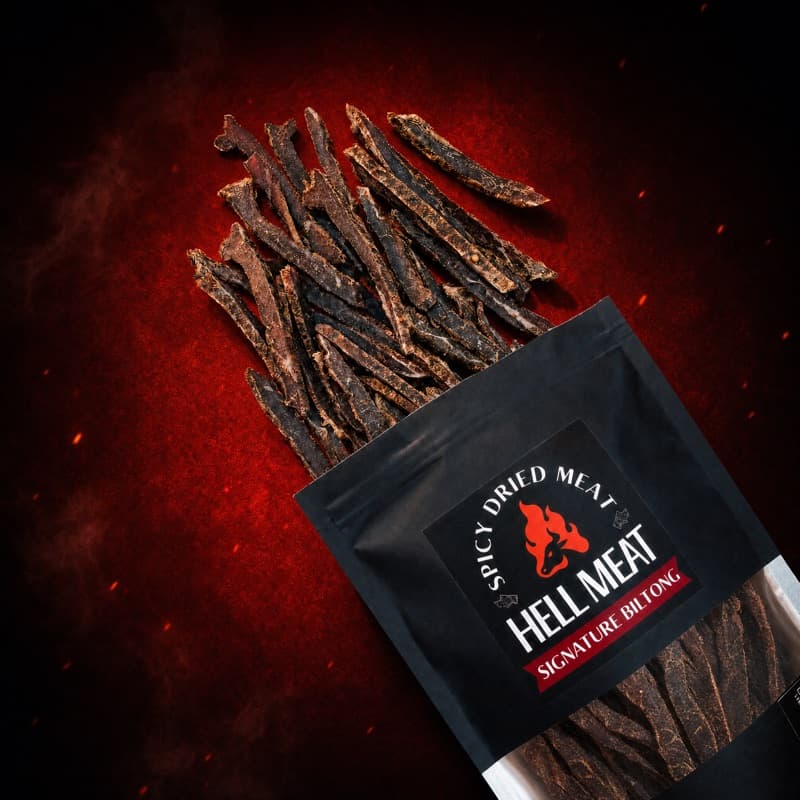
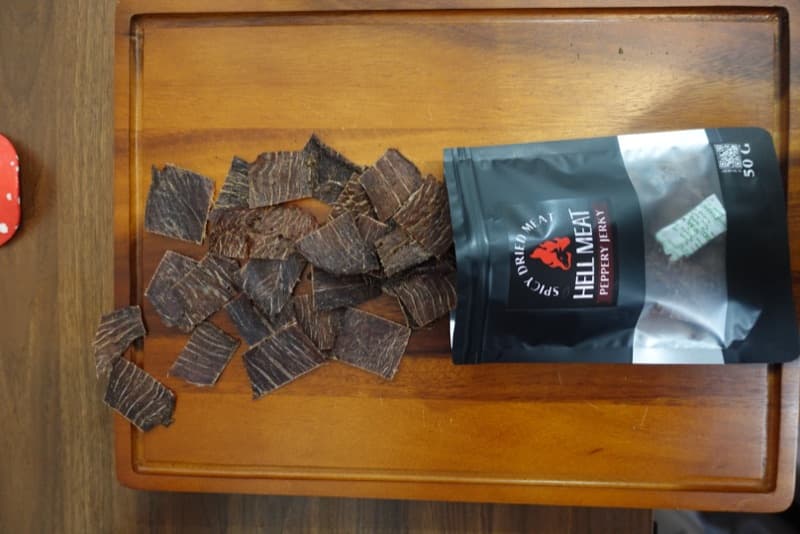
We follow the traditional process and refuse to cut corners on it. We source single-origin Thai-French Charolais beef, trim it lean, cure it with vinegar, salt and a coriander-forward spice, and air-dry it slowly. Our Signature Heat line works Carolina Reaper, the world's hottest chili at over 1.5 million Scoville Heat Units, into that cure, so the burn is built in from the start rather than dusted on top. Because we work in small batches, we can keep the cut, the cure and the dry consistent instead of chasing volume.
That is genuinely all there is to it: cut, cure, air-dry, wait. No sugar, no MSG, no oven. If you want to taste what the slow method actually does to a piece of beef, try Signature Heat and see how different air-dried really tastes.