So, what is biltong? It is air-dried, salted beef: thin cuts of raw meat cured with vinegar, salt, and spice, then hung to dry in cool moving air until it turns chewy, deeply savoury, and dense with protein. Nothing is cooked, nothing is smoked, and no sugar is needed to make it taste good. If beef jerky is the loud American cousin, biltong is the older, cleaner South African original.
What is biltong, exactly?
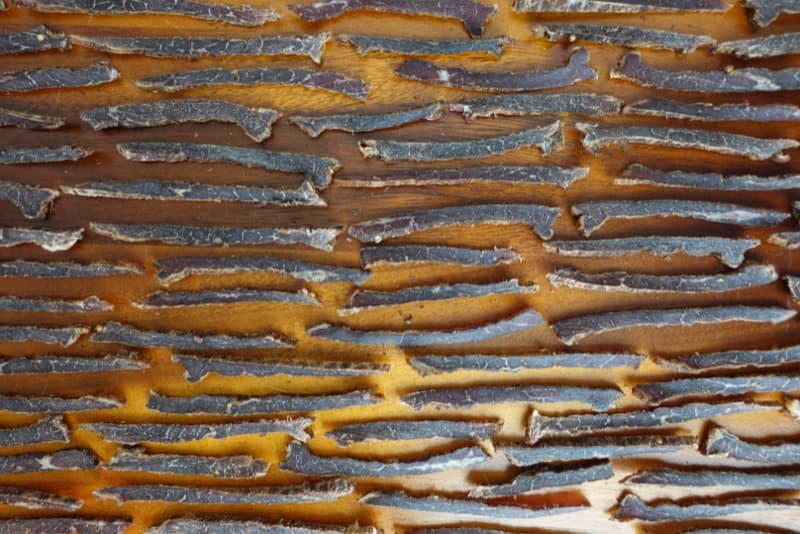
Biltong is a traditional South African beef snack made by curing and air-drying whole strips of meat. The name comes from Dutch-Afrikaans roots: bil (rump or hind cut) and tong (strip or tongue). Centuries before refrigeration, settlers and herders preserved beef by rubbing it with salt and vinegar, coating it in coarse spices like black pepper and coriander, and hanging it to dry in the breeze. What began as survival food is now a modern high-protein snack — the full arc is in the history of biltong.
The core of biltong never changed:
- Raw beef, sliced with the grain into strips or slabs.
- A vinegar-and-salt cure that draws out moisture and protects the meat.
- A dry spice rub, usually pepper and toasted coriander.
- Slow air-drying at low temperature, not heat.
That is the whole method. The ingredient list is short enough to read out loud, which is a big part of why people who care about what they eat keep coming back to it.
How biltong differs from cooked and dehydrated snacks
The single biggest thing that separates biltong from most meat snacks is that it is cured, not cooked. Beef jerky is typically marinated and then dried with heat, often in a dehydrator or low oven, and mass-market versions lean on sugar, soy, and additives to carry the flavour. Biltong instead relies on the acid in vinegar and the salt cure to make the meat safe and shelf-stable, and on gentle airflow to finish it.
That difference in method changes the result on your tongue. Heat-dried snacks tend to be tougher, drier, and often sweeter. Air-dried biltong stays tender in the middle and tastes purely of beef and spice. If you want the full side-by-side, we break it all down in biltong vs beef jerky, and we walk through the drying room itself in how biltong is made.
A quick comparison
| Biltong | Typical jerky | |
|---|---|---|
| Made by | Curing + air-drying | Marinating + heat-drying |
| Heat used | Low or none | Higher |
| Added sugar | Usually none | Often high |
| Texture | Tender, meaty | Firm, chewy-dry |
Why biltong is high in protein and clean
Drying beef removes most of its water, and what is left behind is concentrated. That is why biltong is roughly half its weight in protein once dried, working out to around 25 to 30 grams of protein per 50-gram serving, depending on the cut. It is naturally low in carbohydrate, and good biltong contains no added sugar at all.
For anyone watching what goes into their food, the appeal is the honesty of it. A proper batch needs only beef, vinegar, salt, and spice, so there is no filler, no MSG, and no sweetener working overtime. A high-protein snack that keeps you full may make it easier to get through a long afternoon or a training block without reaching for something sugary, though it is worth remembering that biltong is a salted, cured product, so it does carry sodium and is best enjoyed in sensible portions.
What biltong tastes and feels like
First-timers are usually surprised by how beefy biltong is. Because it is never cooked hard or drowned in marinade, the flavour is clean and direct: rich meat up front, then the warm, slightly citrusy lift of coriander and pepper. The texture depends on how long it dried. A wetter cut is soft and almost steak-like in the middle, while a longer-dried piece is firmer and more intense.
This is also why biltong travels so well. It needs no refrigeration, does not melt, and leaves no greasy fingers, which makes it a natural fit for a gym bag, a long drive, a hike, or a desk drawer.
The beef makes the biltong
Because the ingredient list is so short, quality comes down almost entirely to the meat. Lean, well-raised beef gives clean flavour and a better protein-to-fat ratio, while cheap trim gives you gristle and grease. This is why sourcing matters more for biltong than for snacks that hide behind heavy seasoning.
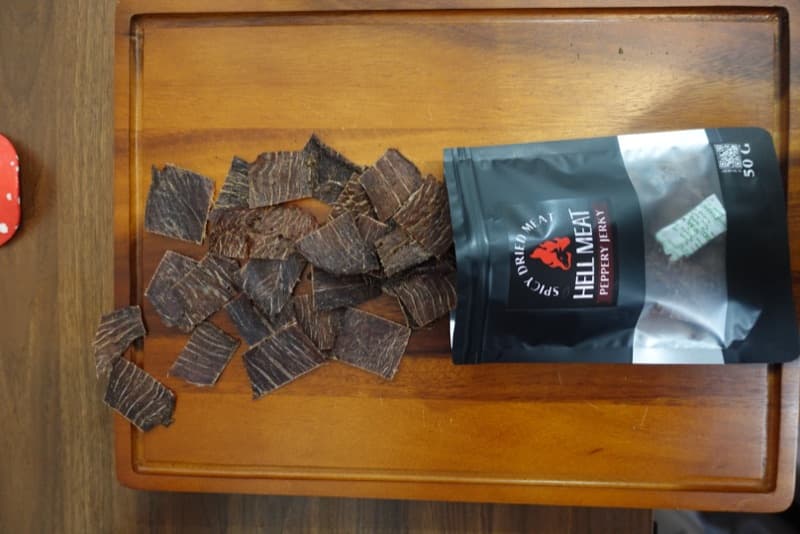
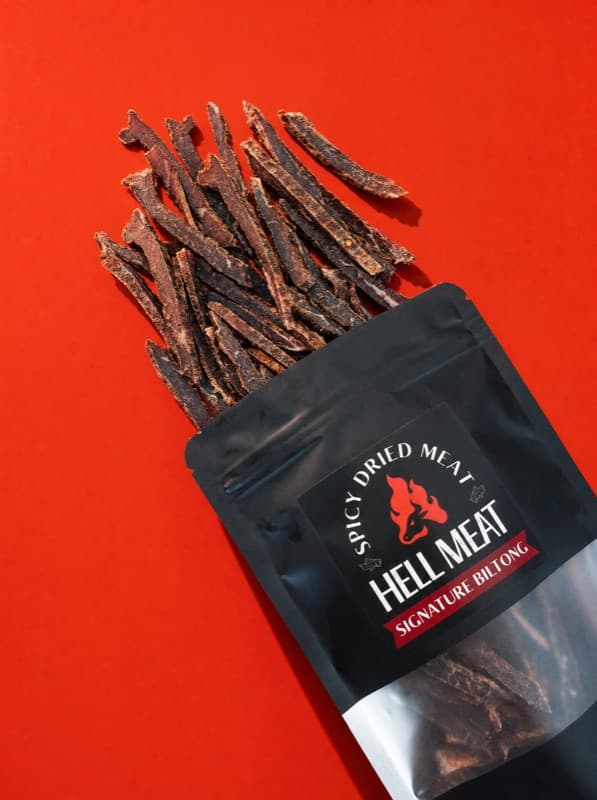
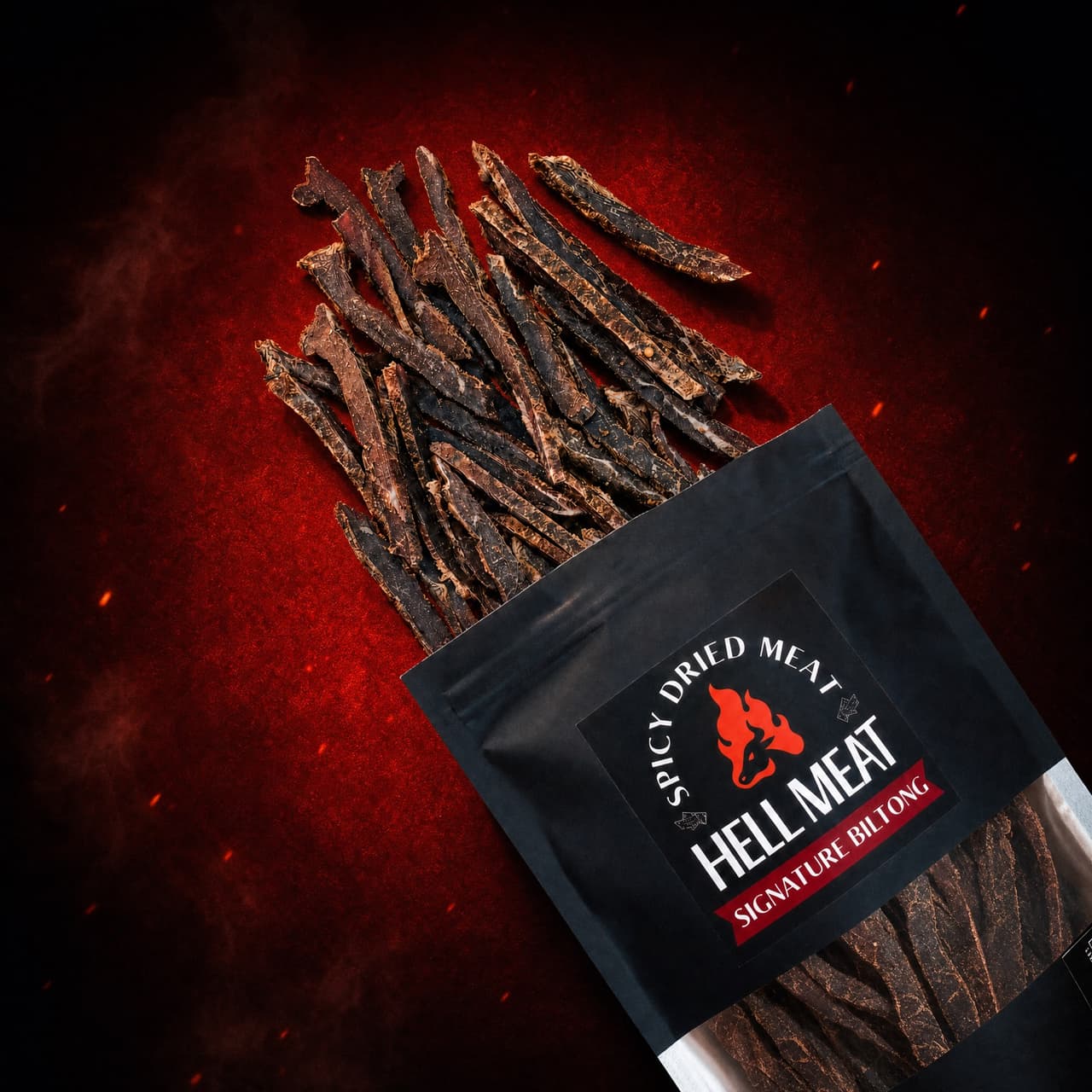
At Hell Meat we make our biltong from single-source Thai-French Charolais beef, a lean, well-muscled French heritage breed raised on Thai farms, so every batch is traceable and consistent. Our Signature Heat line takes that clean base and adds Carolina Reaper, the world's hottest chili at over 1.5 million Scoville Heat Units, while our Peppery Jerky keeps things mild and smoky for anyone easing in.
The short answer
Biltong is air-dried, cured beef: a centuries-old preservation method that happens to produce one of the cleanest high-protein snacks you can eat. It is not cooked, it is not sweetened, and at its best it is nothing but good beef and a handful of spices.
If you want to taste what air-dried Thai beef actually delivers, grab a pack and start with whichever heat level suits you. Mild pepper or full Reaper, it is the same honest snack underneath.