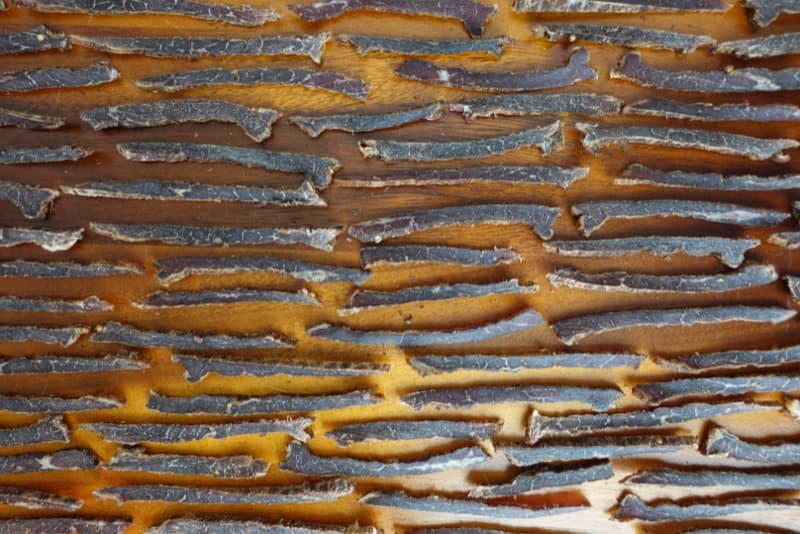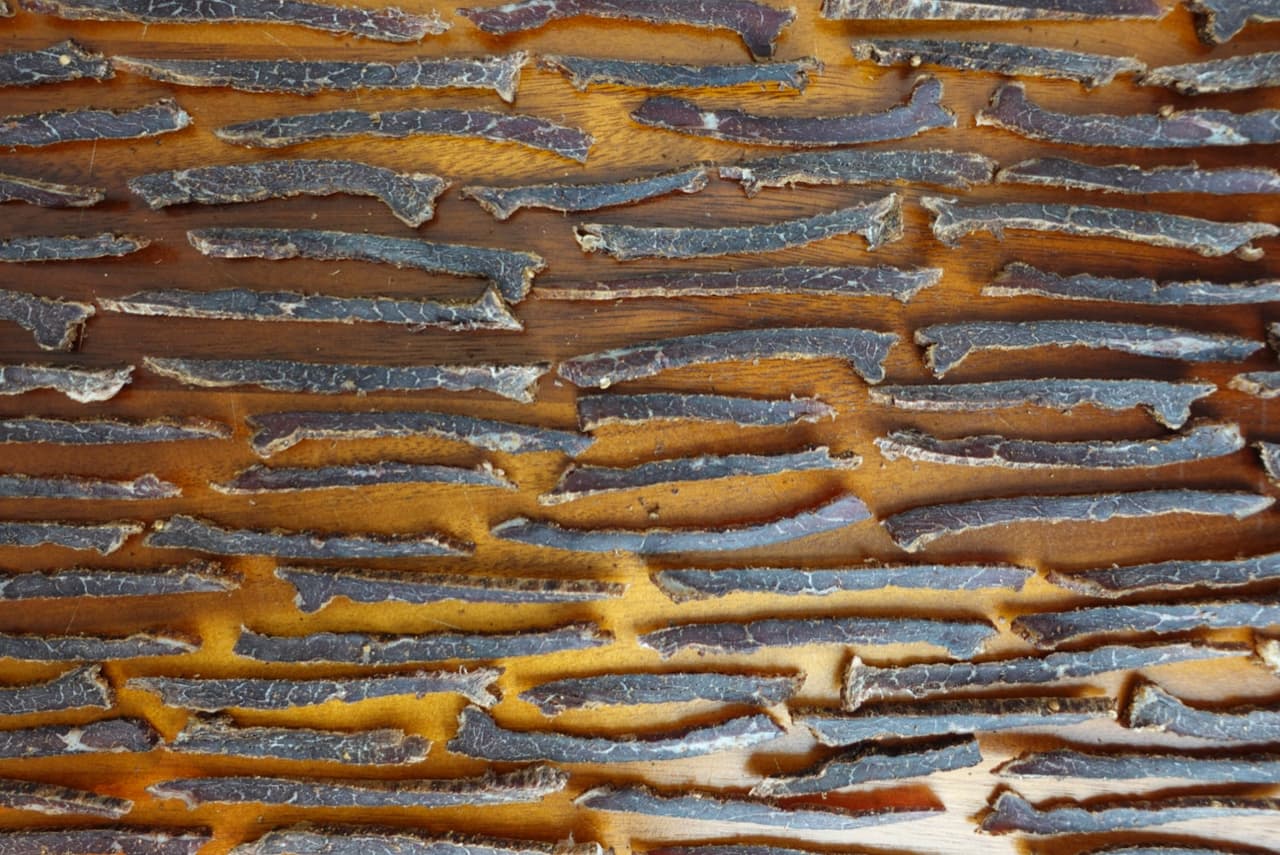
Small batch biltong is not a marketing badge for us. It is simply the way Hell Meat is built. Every run of Signature Heat and Peppery Jerky is dried in limited quantities, checked by hand, and shipped while it is still fresh. Making biltong in small batches means we occasionally sell out, and we would rather run out for a few days than let a pack sit too long or drift off spec.
Plenty of brands print "small batch" on the label because it sounds artisanal. Here is what it actually changes about the beef in your hand.
What "small batch" actually means
There is no legal definition of a "batch," so the phrase is easy to abuse. For us it is concrete: a batch is a single drying run of a fixed, limited weight of beef, cured together, dried together, and packed together with one shared production date.
That has a few practical consequences:
- One cure, one run. The whole batch goes through the same brine, the same spice mix, and the same drying window, so it behaves as one unit.
- A real ceiling on volume. We cap how much beef goes into any single run rather than filling a warehouse-scale dryer. When it is gone, the next batch starts fresh.
- Traceability by design. A smaller run is far easier to follow end to end, which pairs naturally with single-source beef that comes from one traceable herd.
The opposite approach, huge continuous production and long storage, is cheaper per kilo. It also means the snack you open could have been made a long time ago, by a process tuned for volume rather than for taste.
Why small batch biltong stays fresher
Biltong is dried, not sterilised, so time still matters. The longer a dried snack sits between production and your first bite, the more its texture and aroma fade, and the more its fat has a chance to turn. Lean beef helps here, but nothing beats simply not letting it age on a shelf.
Small runs keep the whole chain short:
- We make to demand rather than to a distant forecast, so stock turns over quickly.
- Each pack carries a recent production date instead of one from many months ago.
- Because volume is capped, beef does not pile up in cold storage waiting its turn to be cured.
The result is a snack that tastes the way it did on the day it left the kitchen: firm but not brittle, aromatic, clean. If you want to understand why the drying step is so sensitive to time and handling, our walkthrough of how biltong is made by air-drying rather than cooking covers the process in detail.
Quality control you can actually do by hand
The honest advantage of a small run is that a person can inspect all of it. At our volumes, someone checks the cut, the cure, and the finished dryness of the beef instead of trusting a sensor to average across tonnes of product.
Consistency of heat
This matters most for Signature Heat. It is finished with Carolina Reaper, the world's hottest chili at over 1.5 million Scoville Heat Units, and a chili that strong is unforgiving to dose. A little too much across a giant run and a whole production is punishing; a little too little and it is not Hell Meat.
Small batches let us calibrate the Reaper by taste, run by run, so the burn lands where it should: intense and deliberate, not random. Peppery Jerky gets the same attention at the mild end, where the goal is a clean black-pepper aroma with a smoky finish rather than a moving target.
Catching problems before they ship
When something is off, a cut that is too fatty or a run that dried unevenly, a small batch means we catch it and pull it, not that we have already shipped a pallet of it. Fewer packs per run is a feature, not a limitation.
The honest trade-offs
Small batch production is not free, and we would rather be straight about it than pretend otherwise.
| Small batch | Mass production |
|---|---|
| Fresher, recent production date | Cheaper per kilo |
| Hand-checked, consistent heat | Always in stock |
| Occasionally sold out | Long shelf storage |
The real cost is availability. When a flavour sells through, it is genuinely gone until the next run finishes drying, and good biltong cannot be rushed. We think that is the right side of the trade for a premium snack. We compete on what is in the pack, not on being the cheapest or the most warehoused.
Small batches are part of the whole philosophy
None of this stands alone. Small batch biltong is one piece of a deliberately simple system: one breed of lean Thai beef, one short ingredient list, one careful drying method, and runs a person can actually stand over. If you want the bigger picture of why we built the brand this way, the story behind Hell Meat and its clean, spicy protein explains where the whole approach came from.
Want to taste what a fresh, hand-checked run is like? Grab a pack and pick your heat level, from an everyday Peppery Jerky to the full Reaper burn of Signature Heat. Whatever you choose, it was made in a small run, checked by hand, and sent to you fresh.