Choosing the right pre and post workout snack is less complicated than the supplement aisle wants you to believe. Get a little protein in before you train, get more of it in after, and skip the sugar crash that most "energy" snacks quietly set you up for. Here is how the timing actually works, and why a pack of clean, high-protein biltong handles both jobs without the mess.
How protein timing actually works
For years, gym lore insisted on a narrow "anabolic window" — eat within thirty minutes of your last rep or waste the whole session. The honest, current view is a lot calmer than that. What matters most is your total protein across the day, split into a few solid servings. The timing around training still helps, but it is a nudge, not a cliff edge.
A practical way to think about it:
- Before: a small amount of protein plus some easy carbs gives you something to train on without sitting heavy in your stomach.
- After: a larger protein serving may help support the recovery your muscles do in the hours after training, ideally alongside a proper meal.
None of this requires expensive powders. Real food covers it, and a portable protein snack fills the gaps when a full meal is still hours away.
What to eat before a workout
The pre-workout goal is energy without heaviness. You want fuel in the tank, not a brick in your gut. That usually means:
- Some carbohydrate for ready energy — a banana, a piece of toast, a small bowl of rice.
- A little protein to sit alongside it, without so much fat that digestion slows to a crawl.
- Timing of roughly 30 to 90 minutes before you start, depending on how much you eat.
This is where a few slices of biltong earn their place. Air-dried beef is protein-dense and light in volume, so a small handful gives you a clean protein hit without the greasy, sluggish feeling a heavy meal can leave. Because biltong is a salted, cured product, it also carries sodium — useful context if you are heading into a long, sweaty session, though anyone watching their salt intake should keep the portion modest.
What to eat after a workout
Post-workout is where protein does its most useful work. After training, your body is repairing and rebuilding, and a solid protein serving may help support that process. Pair it with some carbohydrate to top your energy back up.
The classic recovery plate is simple: a protein source, a starch, and something green. But real life is messier — you are on a bus, back at your desk, or heading straight into errands. That is exactly when a pouch of high-protein beef bridges the gap until your next real meal. For a deeper look at building sessions around recovery, our guide to snacks for building muscle goes further on protein needs and portioning.
A simple timing cheat sheet
| When | Goal | Easy snack |
|---|---|---|
| 60 to 90 min before | Light energy plus a little protein | Banana with a few slices of biltong |
| Right after | Protein to support recovery | Biltong with rice, or eggs on toast |
| Between meals | Steady protein, no sugar crash | A small pack of biltong on its own |
Treat these as starting points, not rules. Bigger athletes and longer sessions need more; a short lunchtime workout needs less.
Why biltong works around training
A good training snack has to survive a gym bag, a hot car, and a sweaty commute, and still be something you actually want to eat. Biltong ticks those boxes:
- Portable and shelf-stable — no melting, no refrigeration, no crushed mess at the bottom of your bag. It is one of the reasons it lands on our list of gym bag snack essentials.
- High protein, low sugar — clean beef with no added sugar means no crash mid-session. If you want to compare the wider field, we rank the best high-protein snacks for people who train in a separate guide.
- One-handed and no mess — you can eat it between sets without leaving greasy fingerprints on the bar.
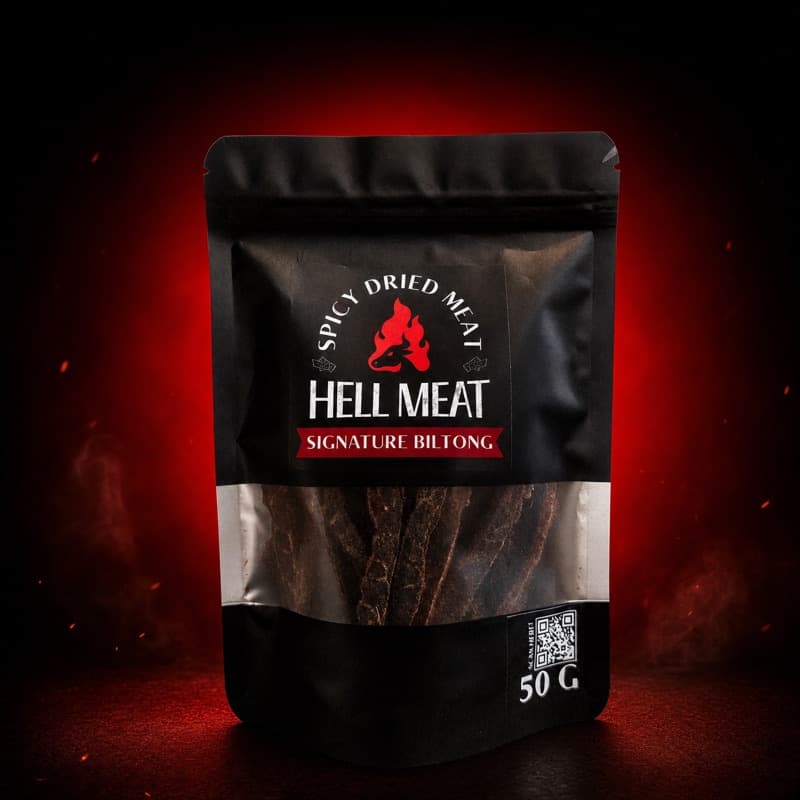
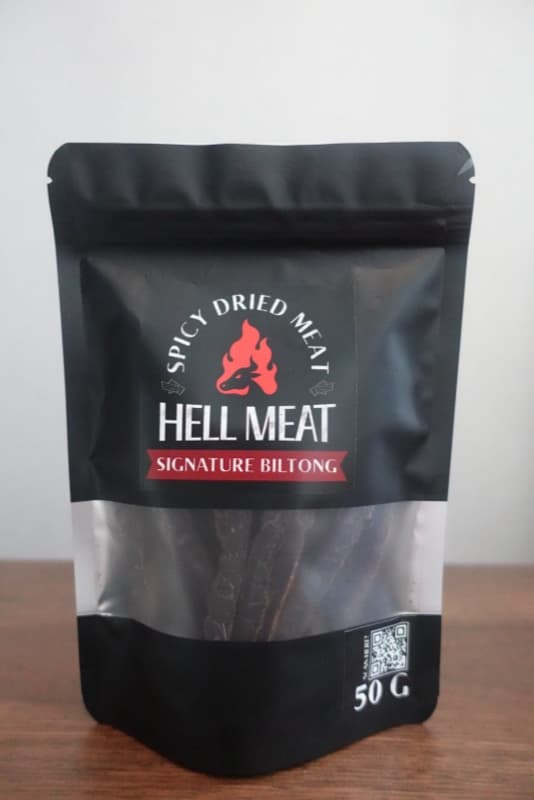
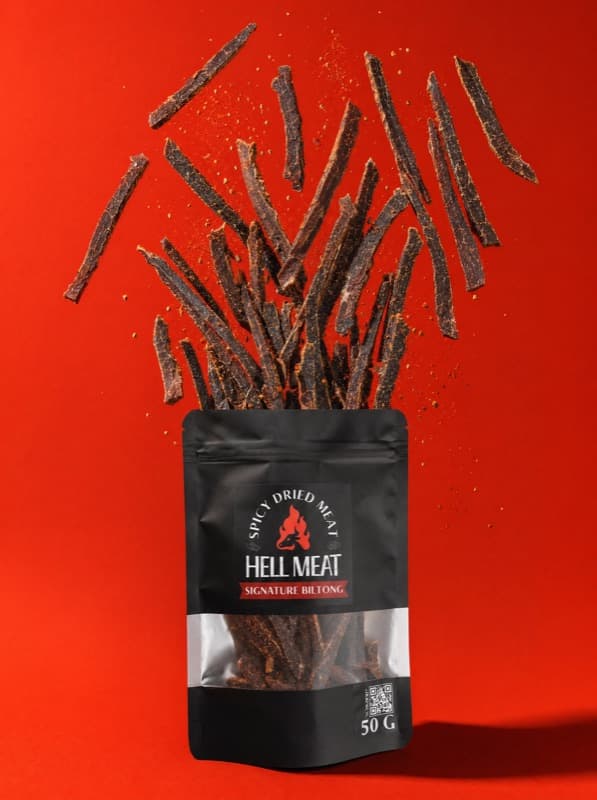
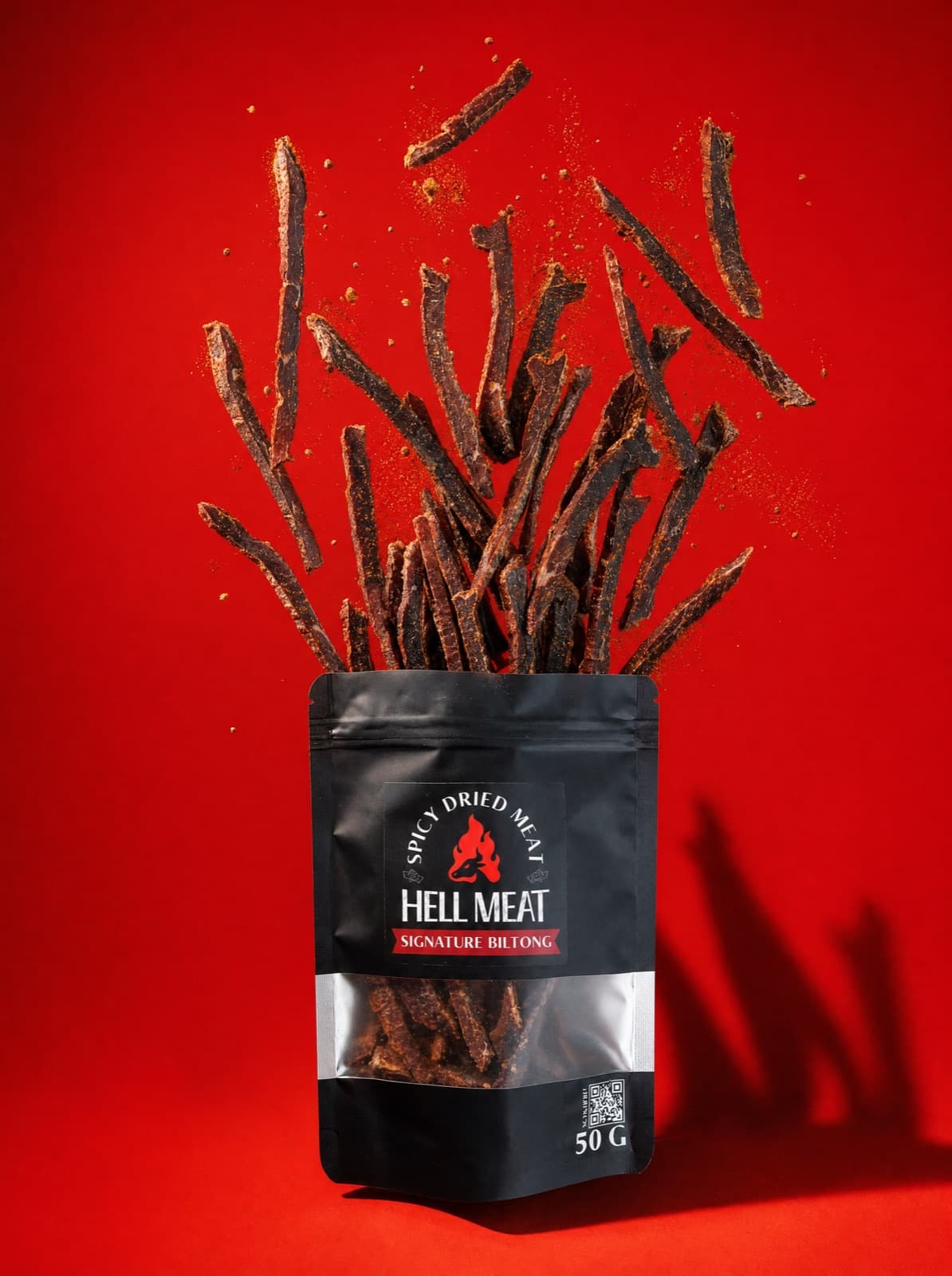
Hell Meat makes it from single-source Thai-French Charolais beef with no sugar and no MSG. Peppery Jerky is the mild, broad-appeal pick if you just want the protein; Signature Heat, our Carolina Reaper biltong at over 1.5 million Scoville Heat Units, is for people who like their pre-workout with a genuine kick.
Building a pre and post workout snack routine
Put it together and a full training day of snacking looks like this: a light carb-plus-protein bite about an hour before, a bigger protein-forward serving soon after, and clean protein to lean on between meals so you are not raiding a vending machine at 4pm. Keep a pack of biltong in your bag and two of those three slots are handled without a second thought.
A few honest caveats. This is general nutrition guidance, not a plan tailored to you — if you train seriously, are managing blood pressure, or have specific dietary needs, talk to a doctor or a sports dietitian. And remember that biltong is a salted snack: it is a genuinely useful protein tool around training, not something to eat by the bagful.
Sort your timing, keep the protein clean, and the rest is just showing up. When you are ready to stock the gym bag, grab a pack and let it do the quiet work before and after every session.