Building muscle happens in the kitchen as much as the gym, and a lot of it happens between meals. The best muscle building snacks are the ones that top up your protein when a real meal is still hours away, keep you full without a sugar crash, and fit into a busy day. This is a practical guide to how much protein you actually need to grow, what to look for in a snack, and where lean beef quietly earns its spot in the rotation.
How protein drives muscle growth
Muscle is built when the protein you eat gives your body the raw material to repair and add to muscle fibres after training. The rough consensus in the research is that most people training for size do well aiming for somewhere around 1.6 to 2.2 grams of protein per kilogram of bodyweight per day. For an 80kg lifter that is roughly 130 to 175g of protein spread across the whole day.
Two ideas matter more than any single number:
- Total daily protein is king. Hitting your target across the whole day matters far more than any one perfectly timed serving.
- Spreading it out helps. Your body can only use so much protein for muscle repair at once, so three or four protein-rich moments tend to beat one giant hit. That is exactly the gap a good snack fills.
This is why snacking is not an afterthought for people chasing size. If you eat three meals and stop there, you often leave long stretches with no protein coming in. A protein-forward snack in the middle keeps the supply steady.
What makes a good muscle building snack
Not everything marketed at gym-goers deserves the label. A snack that helps you build muscle should tick a few boxes:
- Protein-dense. Protein should be the main event by calories, not a garnish on a carbohydrate bar.
- Low in added sugar. Sugar adds calories without helping muscle repair, and it can leave you hungry again an hour later.
- Filling and portable. The best snack is the one you will actually eat, which usually means it survives a bag and needs no fridge.
- Clean enough to read. A short ingredient list you recognise beats a long one you do not.
If you want the wider field ranked by exactly this logic, we lay it out in our guide to high-protein snacks for people who train.
The best muscle building snacks, ranked by protein
No single snack wins for everyone, but if you rank common options by protein per serving, a clear order shows up. These are typical ranges, not exact label values, since brands and portions vary.
| Snack | Typical serving | Rough protein | Notes |
|---|---|---|---|
| Biltong / air-dried beef | 50g | 25-30g | Very dense, no sugar, pocketable |
| Greek yogurt (plain) | 170g | 15-18g | Excellent, but needs a fridge |
| Cottage cheese | 100g | 11-12g | Slow protein, good before bed |
| Boiled eggs | 2 eggs | 12-13g | Cheap, but messy on the go |
| Edamame | 100g | 11g | Solid plant option |
| Tuna pouch | 1 pouch | 15-20g | Great, but not discreet |
| Typical protein bar | 1 bar | 10-20g | Varies wildly, often sugary |
The pattern is clear: dried beef sits at the top on protein density while staying low in carbohydrate and needing no cold storage. Yogurt and cottage cheese are superb at home; eggs and tuna are cheap but awkward to carry; bars are convenient but only as good as their ingredient list.
Where lean beef fits
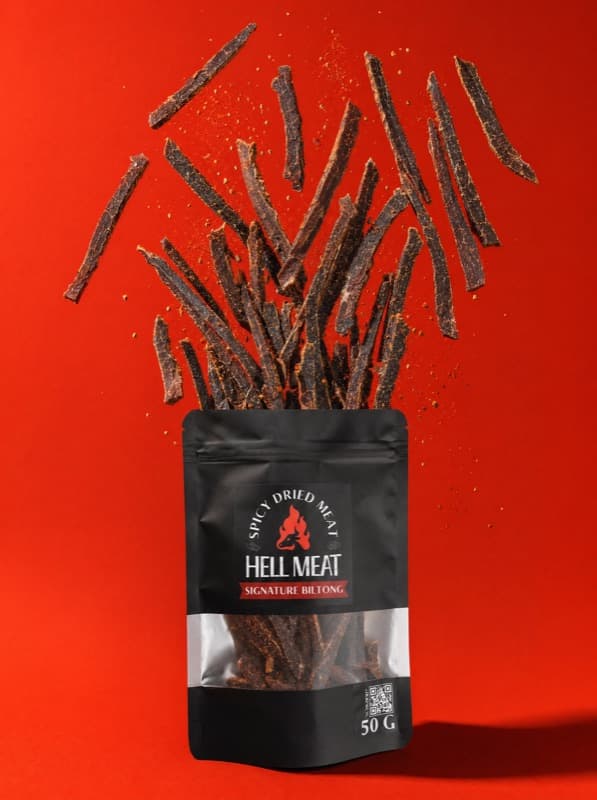
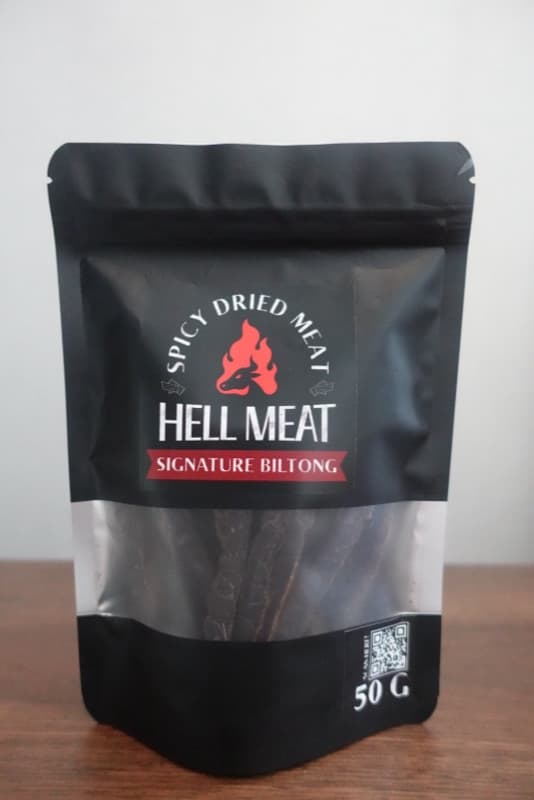
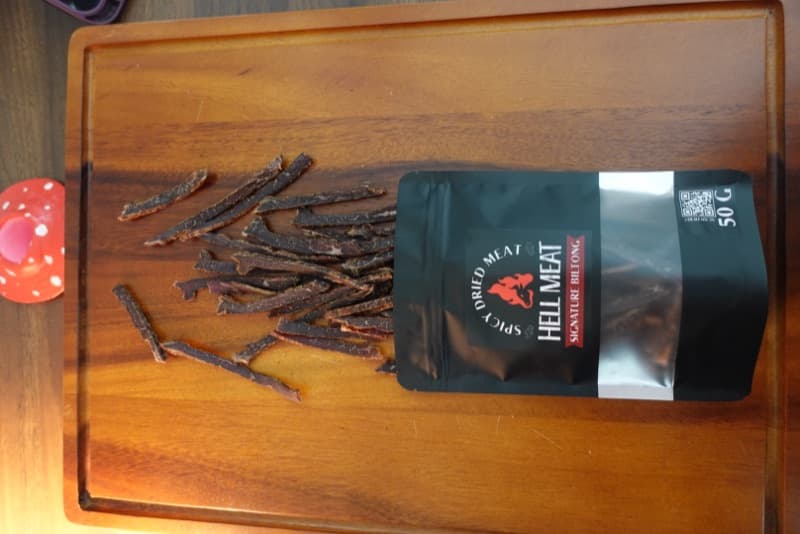
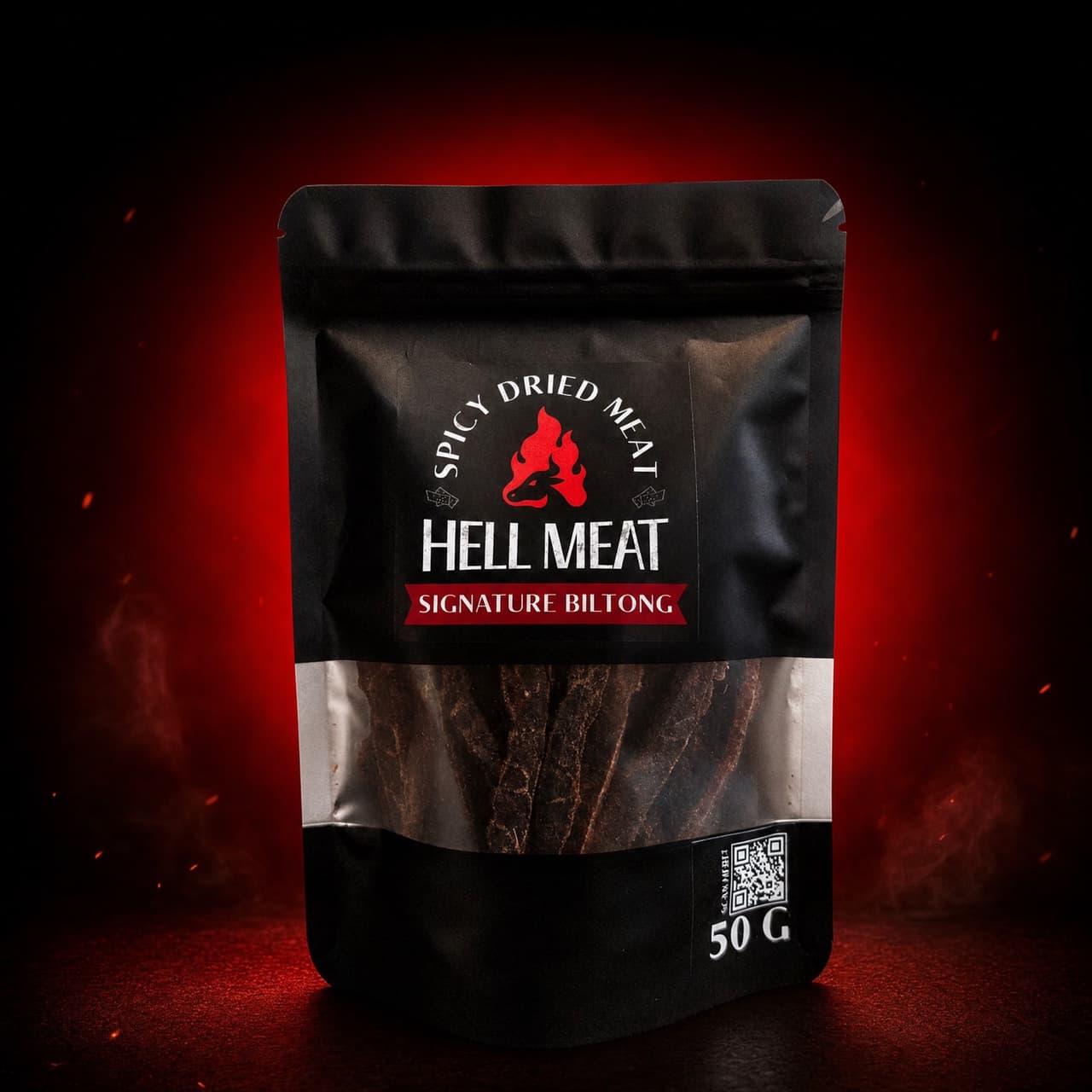
Lean beef is close to an ideal muscle-building food. It is a complete protein, meaning it supplies all the essential amino acids your body needs to repair muscle, including a healthy dose of leucine, the amino acid most associated with triggering muscle protein synthesis. Air-drying that beef into biltong concentrates the protein even further, which is why a 50g serving lands around 25 to 30g of protein while still fitting in a pocket.
That makes it one of the most convenient ways to hit a protein target between meals. No blender, no fridge, no sticky wrapper. A proper batch is just beef, vinegar, salt, and spice, with no added sugar and no MSG, so the calories you are eating are working for muscle rather than padding your sugar intake. It is also durable enough to live in a bag, which is why it is a staple in our list of gym bag snack essentials.
Timing snacks around training
Timing is the finishing touch, not the foundation. Total daily protein does the heavy lifting, but a sensible pattern around your sessions helps:
- Before training, a small amount of protein with some easy carbohydrate gives you fuel without a heavy stomach.
- After training, a larger protein serving supports the repair work happening in the hours that follow.
- Between meals, a steady protein snack stops the long gaps where nothing is coming in.
We go deeper on getting this right in our guide to the right snack before and after a workout. The short version: eat enough protein overall, and use snacks to fill the gaps your meals leave behind.
The honest caveats
A few things worth saying plainly. Protein snacks are a tool, not magic. Muscle is built by training hard, eating enough total protein, and recovering, and no snack shortcuts that. Portions still count, and biltong is a salted, cured product, so it carries meaningful sodium and a 50g serving is a sensible portion rather than a whole bag at once. If you are training seriously, managing blood pressure, or have specific dietary needs, it is worth talking to a doctor or a sports dietitian rather than following general advice.
Keep the protein steady
Building muscle is mostly a game of consistency, and the best muscle building snacks are the ones that keep clean protein coming in on the days a proper meal is out of reach. Pick something dense, low in sugar, and portable, and you take the guesswork out of the gaps between meals.
If you want a protein snack that tastes like real beef instead of a sweetened bar, grab a pack of our Peppery Jerky for a mild everyday option, or Signature Heat if you like a little fire with your fuel.