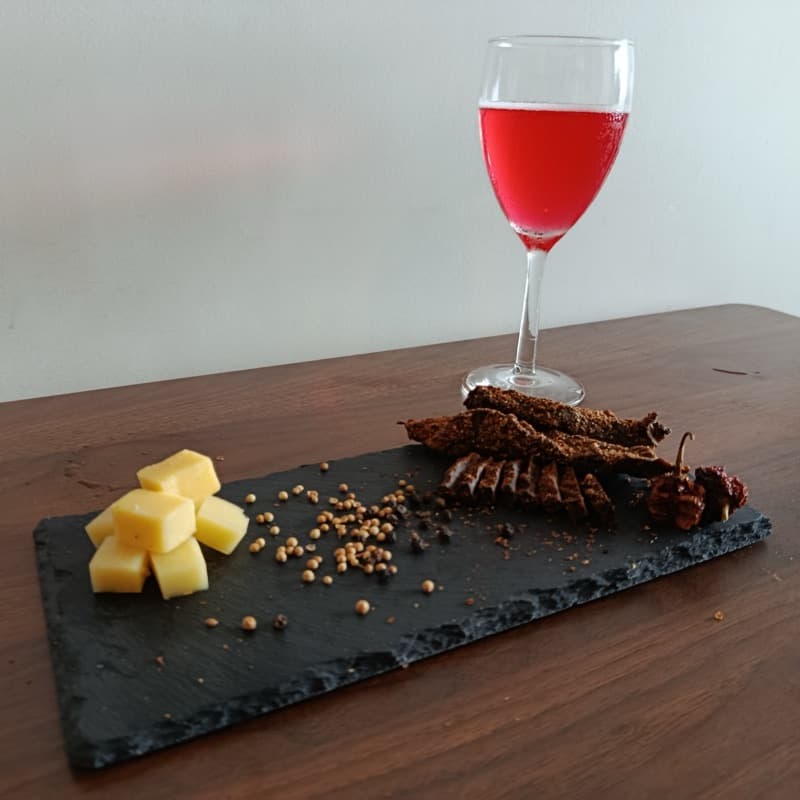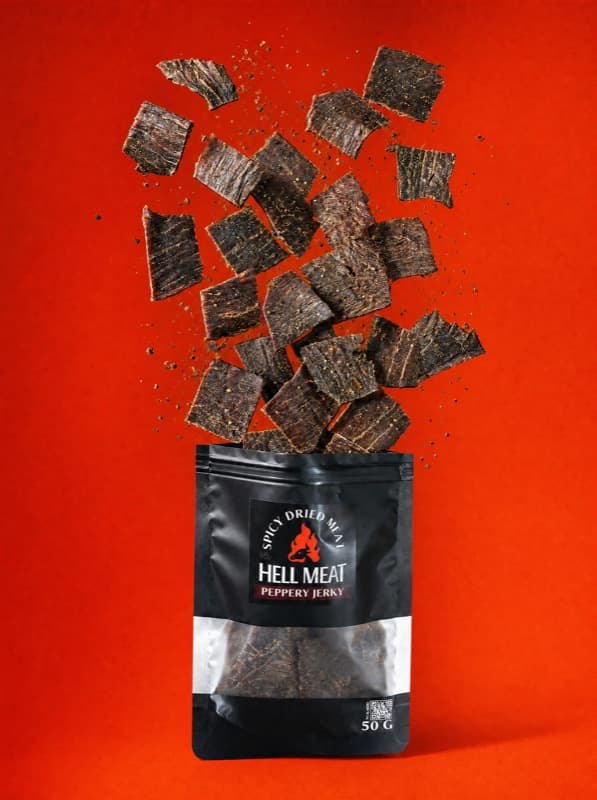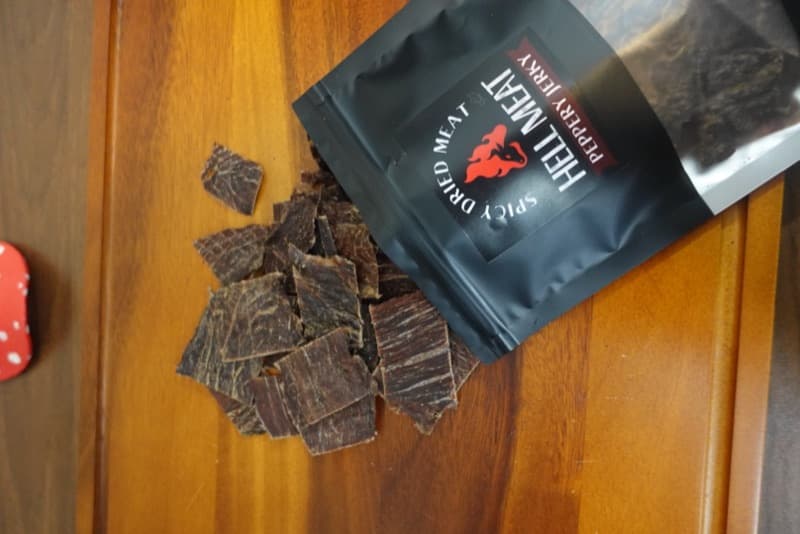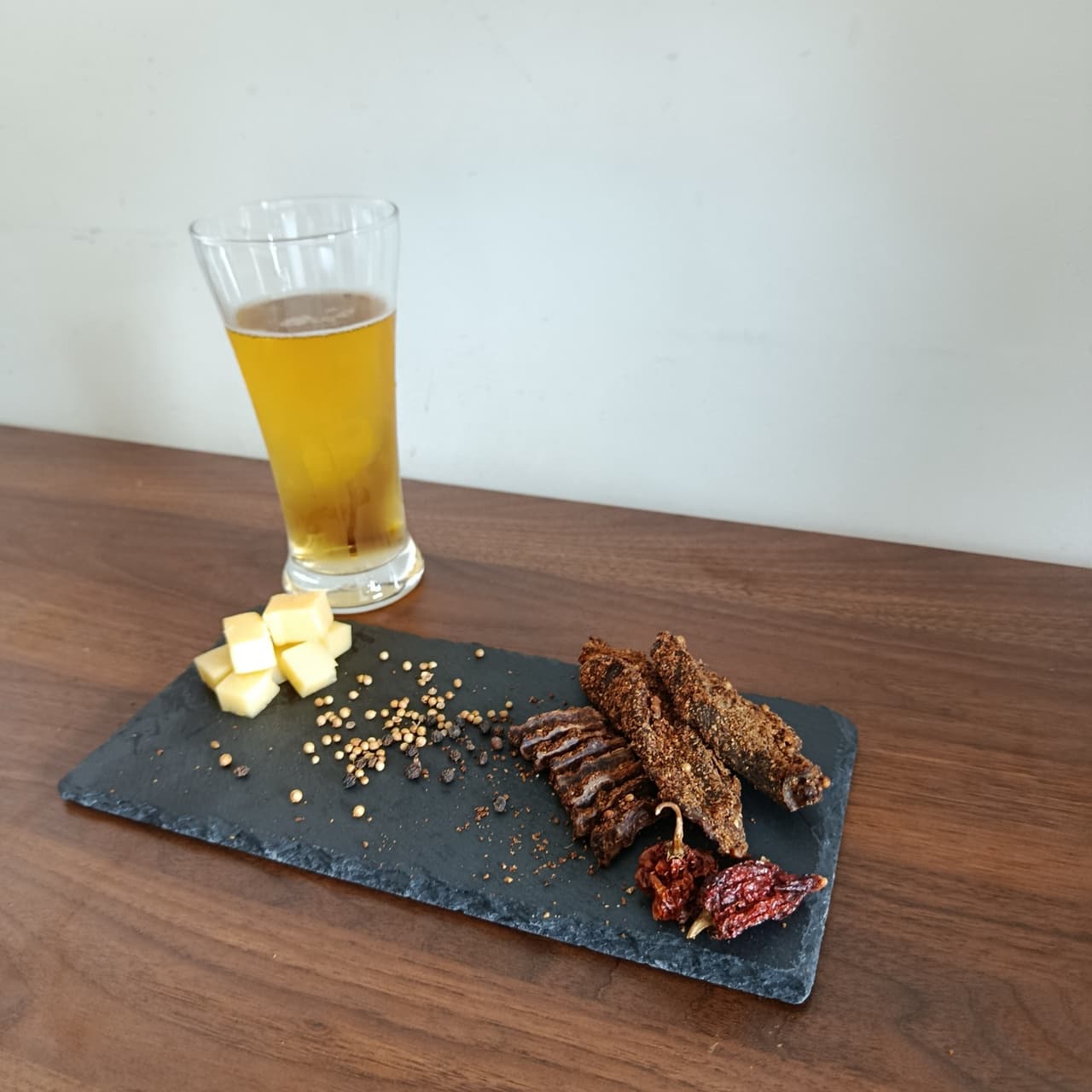
A good biltong and beer pairing is one of the easiest wins in snacking: salty, air-dried beef and a cold glass were practically built for each other. The whole trick is matching the intensity of the meat to the intensity of the beer, so neither one flattens the other. Here is a simple, Thailand-friendly guide to pairing both Hell Meat lines with lagers, local craft, and everything in between.
Why Biltong and Beer Belong Together
Biltong is concentrated beef. Air-drying pulls out more than half the water, so what is left is dense, savory, and salty, with a mineral, umami depth that lingers. That is a lot of flavor to stand up to, and beer answers it well.
Three things make the match work:
- Carbonation resets your palate. The bubbles scrub away fat and salt between bites, so the next piece of biltong tastes as bright as the first.
- Bitterness balances salt. A touch of hop bitterness offsets the cured-beef saltiness the way a squeeze of lime cuts through a rich curry.
- Malt echoes the meat. Toasty, bready malt flavors sit right alongside the roasted, savory notes in dried beef, so the two feel like they belong on the same table.
The result is a snack-and-sip loop that keeps both tasting better than they would alone.
The Golden Rule of Biltong and Beer Pairing
If you remember one thing about biltong and beer pairing, make it this: match the intensity, then decide whether you want to contrast or complement.
Match intensity first. A delicate lager will disappear under a fiery, pepper-heavy snack, and a big, boozy stout will bulldoze a mild jerky. Pick a beer with roughly the same volume as the meat on your board.
Then choose your direction. Complement means echoing flavors that already agree: malty beer with peppery, savory beef. Contrast means using one to tame the other: a slightly sweet, cooling beer against serious chili heat. Both are valid. Peppery Jerky usually rewards complementing; Signature Heat almost always wants contrast.
Pairing Peppery Jerky With Beer
Peppery Jerky is the crowd-pleaser: black pepper, a soft smoky aroma, and mild heat. It is the versatile one, so it pairs with the widest range of beers.
- Crisp Thai rice lagers and pilsners. The classic move. Clean, dry, cold lager lets the black pepper and beef do the talking. This is the pairing to reach for on a hot Bangkok afternoon.
- Pale ales. A little more hop character brightens the pepper and adds a citrus lift without fighting the meat.
- Wheat beers (weizen, witbier). The soft, slightly banana-and-clove character of a wheat beer is a lovely counterpoint to smoky black pepper.
If you are building a spread for friends, Peppery Jerky is also the easy anchor for a shareable biltong charcuterie board, where a clean lager ties the whole plate together.
Pairing Signature Heat With Beer
Signature Heat is a different beast. Built around real Carolina Reaper (over 1.5 million Scoville Heat Units), it brings a slow, building burn. Here the beer's job is not just to complement the beef but to manage the heat, and beer choice matters more than most people expect.
A quick bit of tasting science: hop bitterness and high carbonation tend to sharpen chili burn, and alcohol carries capsaicin further across your tongue. So the hop-forward, high-alcohol beers you might reach for are exactly the ones that turn up the heat. Instead:
- Go maltier and slightly sweet. Amber ales, dunkels, malty lagers, and doppelbocks bring residual sweetness that softens the Reaper's edge.
- Consider a milk stout or a smooth porter. The creamy, roasted body cushions the burn while matching biltong's savory depth.
- A cold wheat beer works in a pinch, thanks to its rounder, less bitter profile.
- Ease off aggressive West Coast IPAs. All those hops plus higher alcohol can amplify the burn rather than calm it.
For more ways to build a plate around the hot stuff, our spicy snack ideas built around jerky and biltong go beyond the beer glass.
A Simple Thai Craft and Lager Pairing Chart
Use this as a starting point, then trust your own palate.
| Beer style | Best with | Why it works |
|---|---|---|
| Thai rice lager | Peppery Jerky | Clean and dry; lets pepper and beef shine |
| Pilsner | Peppery Jerky | Crisp bitterness balances the salt |
| Pale ale | Either line | Citrusy hops lift both pepper and mild heat |
| Wheat beer | Peppery Jerky or Signature Heat | Round, low-bitterness body cools chili |
| Amber ale / dunkel | Signature Heat | Malty sweetness softens Reaper burn |
| Milk stout / porter | Signature Heat | Creamy roast cushions the heat |
Serving It Right: Temperature and Order
A few small habits make a home tasting feel intentional:
- Serve the beer cold and the biltong at room temperature. Cold beef mutes flavor and firms the texture; let it sit out for ten minutes.
- Taste from mild to hot. Start with Peppery Jerky and a light lager, then move to Signature Heat with a maltier beer. Going the other way leaves your palate too scorched to notice subtlety.
- Keep water on the table alongside the beer, and remember that a sip of a creamy beer tames chili better than a gulp of a bitter one.
Prefer wine with your cured beef? The same intensity-matching logic carries straight over to our biltong and wine pairing guide.
Pour One and Find Out
The best biltong and beer pairing is the one you actually enjoy, so treat all of this as a map, not a rulebook. Grab a cold local lager for the pepper, a malty pour for the Reaper, and a mix of both flavors to play with. Ready to build your board? Grab a pack of Signature Heat and Peppery Jerky and pour something cold.