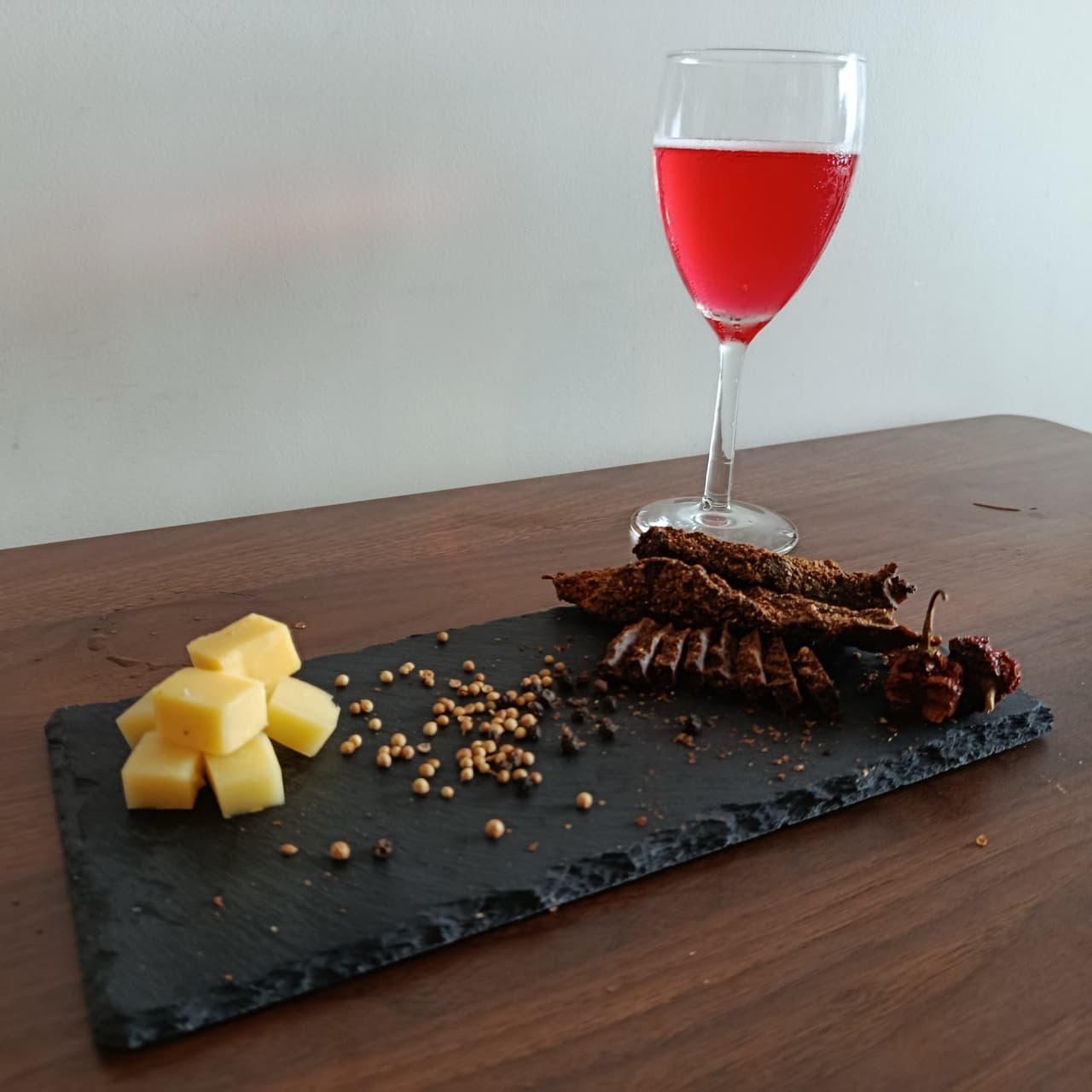
A biltong charcuterie board is the fastest way to turn a bag of air-dried beef into a proper centerpiece. Instead of a plate of cheese and crackers everyone politely nibbles, you get a savory, protein-forward spread that people actually crowd around. Biltong brings the depth of real cured meat, and because it is lean and clean, it plays beautifully against soft cheese, sharp fruit, and a little heat. Here is how to build one that looks generous, tastes balanced, and does not take an hour of fiddling.
Why biltong belongs on a charcuterie board
Classic charcuterie leans on cured Italian and Spanish meats: prosciutto, salami, chorizo. Biltong is a different animal, literally and texturally. It is air-dried rather than smoked or fermented, so the flavor is cleaner and beefier, with none of the greasy finish some cured sausages leave behind.
That makes a biltong board feel lighter even though it is high in protein. A 50g portion of biltong is roughly half its weight in protein, around 25 to 30 grams, so a shared board built around it delivers real substance, not just salt and fat. It is also naturally low in sugar and has no need for the fillers you find on a lot of deli meat, which keeps the whole spread honest.
The other advantage is practical: biltong is shelf-stable. Keep a couple of packs in the cupboard and you can assemble a board on ten minutes' notice when guests turn up, no planning ahead required.
What goes on a biltong charcuterie board
The trick to any good board is contrast: something rich, something sharp, something sweet, something crunchy. Biltong is your rich, savory anchor. Build the rest around it.
The meat, front and center
Fan out the biltong as the star, not an afterthought. Two moves work well:
- Slice some thin. Whole pieces cut across the grain into coins are easy to grab and show off the marbling.
- Leave some in strips. Thicker pieces or sticks give people a proper chew and a rustic look.
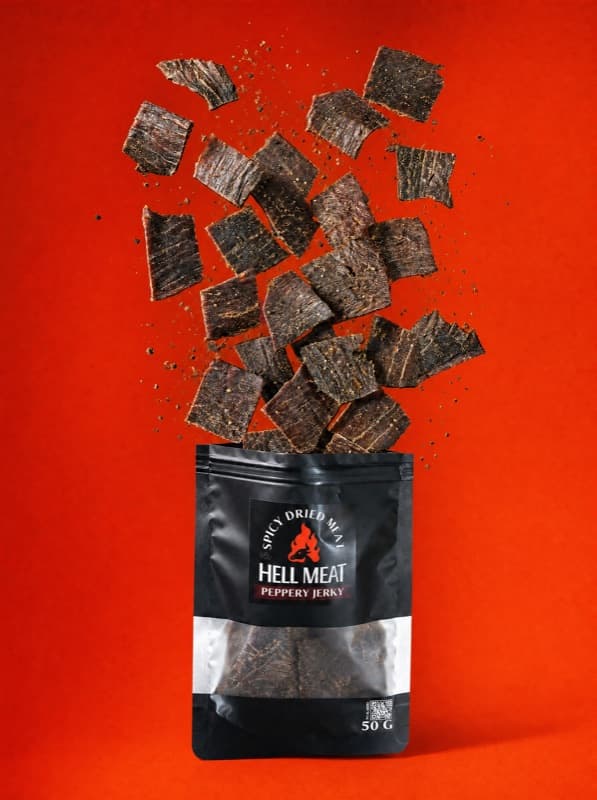
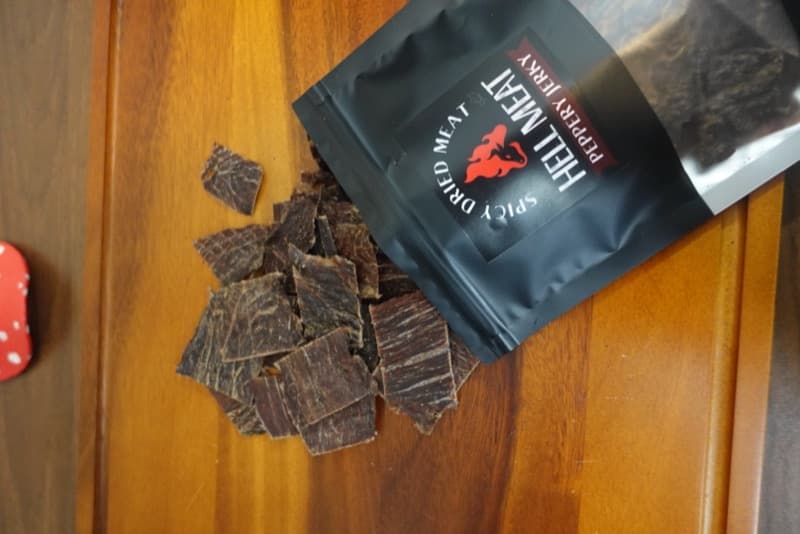
If you want range on one board, put a mild option and a fiery one at opposite corners. Hell Meat Peppery Jerky, black pepper and smoky, is the crowd-pleaser; Signature Heat, biltong spiked with Carolina Reaper, is there for the ones who chase the burn.
Cheese that stands up to beef
You want cheeses with enough character to hold their own:
- Aged hard cheese (cheddar, gouda, parmesan) for a salty, nutty match.
- Something creamy (brie, camembert, or a soft goat cheese) to soften the salt of the meat.
- A blue, if your crowd likes it, for a bold contrast against the pepper.
Fruit, fresh and sweet
Sweetness and acidity cut through the salt. Fresh grapes, figs, apple or pear slices, and a few dried apricots all work. A little honey or fig jam in a small bowl gives people something to drizzle, and it pairs especially well against the heat of a spicy biltong.
Crunch and the extras
Finish with texture and bulk: crackers or sliced baguette, a handful of almonds or cashews, olives, cornichons, and maybe some dark chocolate in a corner. Pickled things are your friend here; the vinegar echoes the tang of the biltong's own cure.
How to actually build the board
Assembly is where a board goes from "some food on wood" to something people photograph:
- Start with the anchors. Place cheeses first, spaced out, then pile the biltong in two or three spots so the eye moves around the board.
- Fill the gaps. Tuck fruit, olives, and nuts into the spaces between. Odd numbers and small clusters look more abundant than neat rows.
- Add height and flow. Fan crackers, curl slices, let a few pieces spill over. A board should look a little overfilled.
- Bowls for anything loose. Honey, jam, olives, and dips go in small dishes so they do not swim into everything else.
One table to keep the balance right:
| Element | Role | Examples |
|---|---|---|
| Biltong | Savory anchor | Peppery Jerky, Signature Heat |
| Cheese | Richness | Cheddar, brie, blue |
| Fruit | Sweet and acid | Grapes, figs, apple |
| Crunch | Texture | Crackers, almonds, olives |
| Dip | Glue | Honey, fig jam, mustard |
Match the board to a drink
A board is only half the evening; the pour matters. Spicy biltong and cold beer are a natural fit, and our guide to pairing biltong with beer breaks down which styles tame the heat and which lean into it. If you are opening a bottle instead, matching biltong with wine covers how a bold red stands up to cured beef and how spice changes the pairing.
Keep the drinks simple. The board already carries a lot of flavor, so you want something that refreshes between bites rather than competing with them.
The board as a gift or a party move
A biltong charcuterie board scales up for a party and down to a date night, and it makes a genuinely good host gift when you bring the components in a box. If you are shopping for someone who loves cured meat, a range of spice levels is a thoughtful touch; our biltong gift guide has multipack ideas sorted by palate.
For a board that anchors on clean, single-source Thai-French Charolais beef with a real kick, grab a pack of Signature Heat and a milder one to match, and let the beef do the heavy lifting.