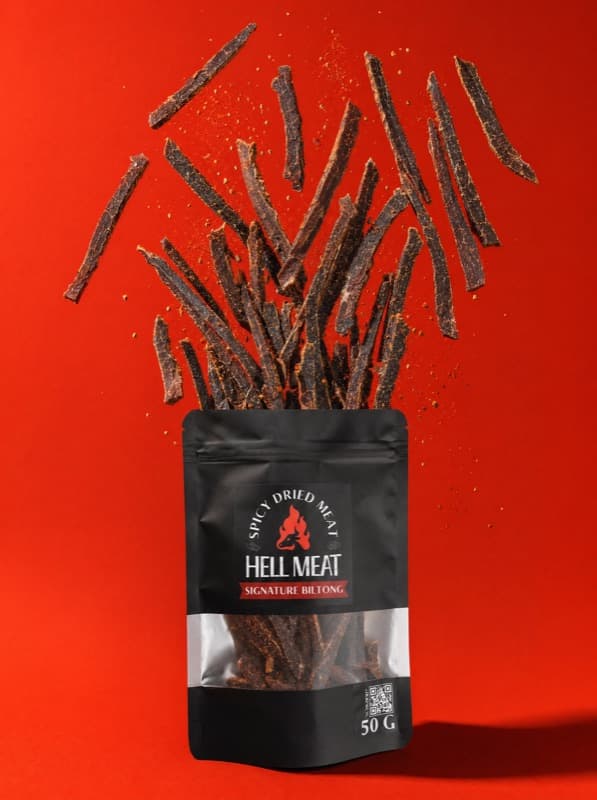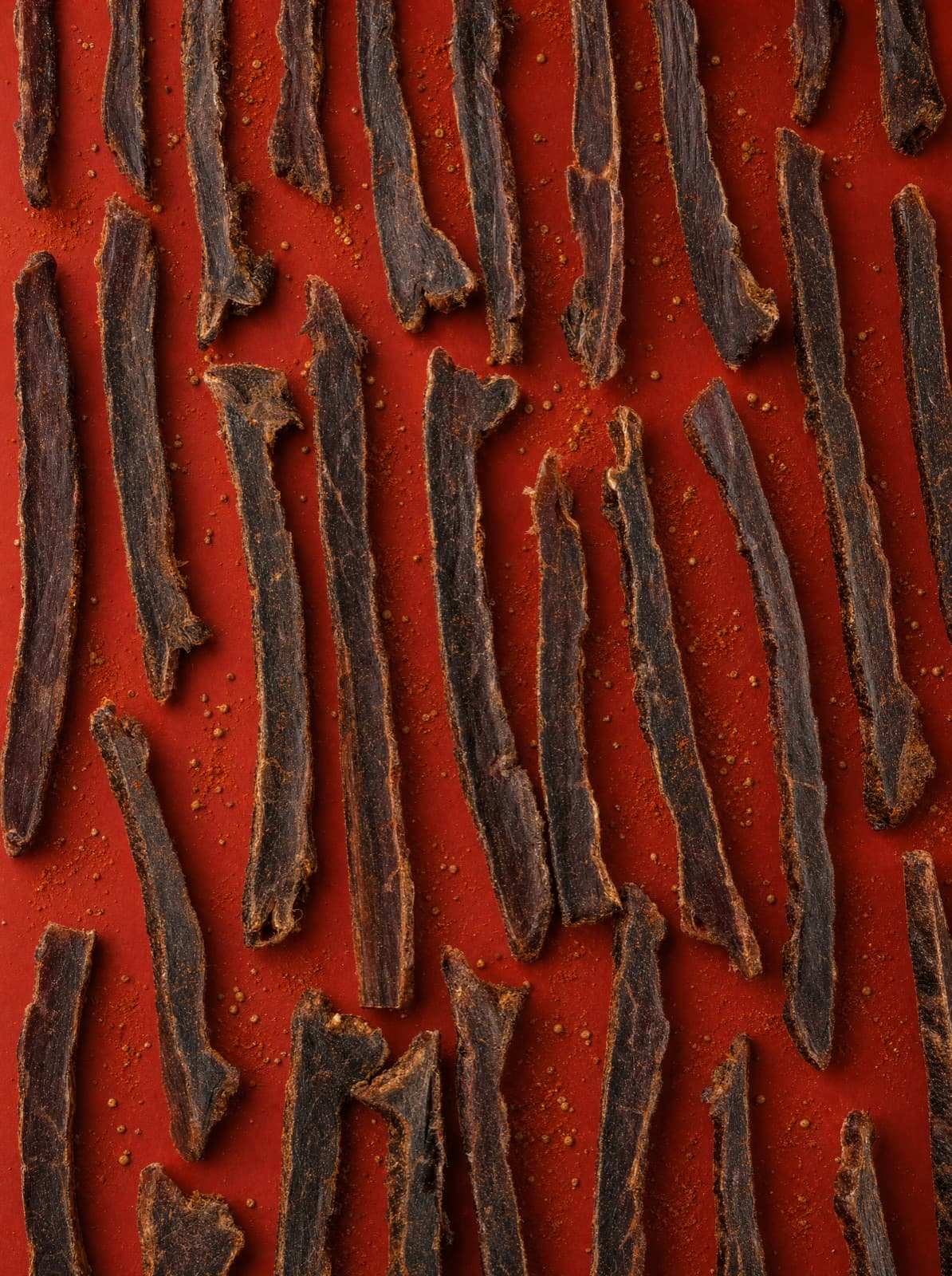
If you want the short version of biltong nutrition facts, here it is: a 50g serving is roughly half its weight in protein, close to zero sugar, low in carbs, and moderate in fat. That is an unusual profile for a snack you can keep in a bag with no fridge, and it is the main reason lean air-dried beef has become a go-to for people who count their macros. Below is the full breakdown of what is actually in the pack, and how it fits a normal day of eating.
Numbers here are typical ranges for lean, whole-muscle biltong like ours. Exact figures shift with the cut, how far it is dried, and the seasoning, so treat these as a sensible guide rather than a lab printout.
Biltong nutrition facts at a glance (per 50g)
A 50g pack of Hell Meat biltong lands in roughly this territory:
| Nutrient | Per 50g (typical) |
|---|---|
| Energy | ~150-180 kcal |
| Protein | ~25-30 g |
| Carbohydrate | ~1-3 g |
| of which sugars | ~0-1 g |
| Fat | ~4-7 g |
| Sodium | meaningful (it is salt-cured) |
The headline is the protein column. Very few snacks you can carry in a bag and eat with one hand deliver 25 grams-plus of protein without a pile of sugar riding along.
Why 50g of dried beef is a lot of beef
Biltong loses more than half its starting weight as water evaporates during drying. So a finished 50g serving began life as well over 100g of raw beef. You are essentially eating concentrated lean beef with the water taken out, which is why the protein per gram is so much higher than the fresh cut it came from.
Why the protein density is so high
Air-drying is a concentration process, not a cooking process. As moisture leaves, everything else, protein especially, gets denser per gram. That is the core of the story:
- Whole-muscle beef to start. Biltong is made from real muscle cuts, not reformed paste, so it is protein-rich before drying even begins.
- Water removed, protein stays. Drying pulls out water without destroying the protein, so the finished ratio climbs.
- Lean sourcing. We use single-source Thai-French Charolais beef, a naturally lean breed, which keeps the fat share modest and the protein share high.
Roughly speaking, good biltong is around half its finished weight in protein. On a 50g serving that is the 25-30g range, comparable to a chicken breast portion or a scoop-and-a-half of many protein powders, but in a form that needs no fridge and no prep. If you are ranking snacks by protein, biltong sits near the top of any honest list of the best high-protein snacks.
Carbs and fat: the quiet columns
Carbohydrates. Traditional biltong is close to a zero-carb food. There is no breading, no sugar glaze, and no sweet marinade, just beef, vinegar, salt, and spice. Most of the 1-3g you might see comes from the spices, not from added sugar. That matters, because a lot of mass-market jerky is quietly sweetened, which pushes carbs up and undercuts the whole "clean protein" idea. Because the sugar and carb load stays so low, biltong is one of the easier snacks to slot into a keto or low-carb plan.
Fat. Fat sits in a moderate band and depends heavily on the cut. Lean whole-muscle biltong keeps it in the single digits per 50g. Some of that fat is a feature, not a flaw: it carries flavor and helps with satiety, so we are not chasing a zero. We are chasing lean beef that still tastes like beef.
Sodium: the honest trade-off
Here is the part no responsible biltong writer should skip. Biltong is a salt-cured product: salt is the mechanism that pulls water out and keeps the meat shelf-stable without refrigeration. That means every serving carries meaningful sodium. This is not a low-salt food, and pretending otherwise would be dishonest.
For most people snacking on a sensible portion, that is fine as part of a balanced day. But if you are managing your blood pressure or watching your salt for any reason, keep an eye on how much you eat in one sitting and factor it into your daily total. We wrote a fuller, honest breakdown of the sodium in biltong if you want the detail. When in doubt, ask your doctor what daily sodium range is right for you.
How biltong fits your daily targets
Think of biltong as a protein top-up, not a meal replacement. A few ways it lands well in a normal day:
- Between meals. A 50g pack adds 25-30g of protein without the sugar crash of a sweet snack, which can help you feel full until the next meal.
- Around training. It is an easy, portable way to add protein when a full meal is not practical. The timing is flexible; the protein is the point.
- As part of your macros, not on top of them. Count the calories and sodium like any other food. Biltong is efficient, but it is still food, not a free pass.
A simple rule of thumb: if your target is around 100-150g of protein a day, a single 50g pack covers roughly a fifth of it in one savory, shelf-stable hit. That efficiency, high protein with low sugar, low carbs, and no fridge, is exactly why it earns a spot in a gym bag or a desk drawer.
The bottom line
The reason biltong nutrition facts read so cleanly is that the food itself is simple: lean beef with the water taken out and a little spice. You get a lot of protein, almost no sugar, low carbs, moderate fat, and a real amount of salt that deserves respect. Snack on a sensible portion and it is one of the most protein-efficient things you can keep in a bag.
If a snack that is mostly protein sounds like your kind of fuel, grab a pack and check the panel yourself.