Learning how to store biltong is the difference between beef that stays firm, savory, and snackable for weeks and beef that turns soft or moldy in a hot Bangkok kitchen. Air-dried beef is naturally shelf-stable, but shelf-stable is not indestructible, especially in Thailand's heat and humidity. This guide covers how to keep every piece tasting the way it did on day one, at home and on the go.
How to store biltong: the short answer
If you remember one thing, remember this: biltong wants to be dry, cool, and breathing. It is a cured meat, not a sealed snack that likes to suffocate. The enemies are moisture and warmth, because together they invite mold; the friends are airflow and a stable temperature.
Here are the core rules in one place:
- Keep it dry. Humidity is what turns good biltong bad. Keep it away from steam, condensation, and damp air.
- Let it breathe. A paper bag or a container with a little airflow beats a sealed plastic pouch left shut for days.
- Keep it cool and out of the sun. A stable, cool spot beats a hot windowsill or a car dashboard.
- Eat opened biltong within a few days at room temperature, or refrigerate it to stretch that window.
- Freeze it if you are storing for weeks or months.
Why storage is harder in the Thai climate
Biltong was born in a dry climate, and Thailand is anything but. The same warm, humid air that makes the country wonderful is exactly what dried meat dislikes. Moisture is the real problem: it softens the surface, and a soft, damp surface is where mold takes hold.
There is an upside built into the product itself. Real biltong is preserved by salt and vinegar rather than a laboratory of additives, which is part of what gives it staying power without refrigeration. Our breakdown of what's actually in biltong walks through why those few ingredients matter. That same curing salt is why biltong keeps as well as it does; it is also why biltong carries meaningful sodium, which we cover honestly in our note on sodium in biltong.
The practical takeaway for Thailand: give it airflow, keep it out of the humidity, and when in doubt, use the fridge or freezer.
Fridge, pantry, or freezer: where biltong should live
Where you store biltong depends on how fast you plan to eat it. Here is a simple way to decide:
| Storage spot | Best for | Rough window | Notes |
|---|---|---|---|
| Pantry / cupboard | Sealed, unopened packs | Until the printed date | Cool, dry, out of direct sun |
| Counter (paper bag) | Biltong you are eating now | A few days | Airflow only; not in humid air |
| Fridge | Opened packs you want to slow down | One to a few weeks | Let condensation escape; a paper bag inside helps |
| Freezer | Long-term storage | Months | Portion first; thaw in the fridge |
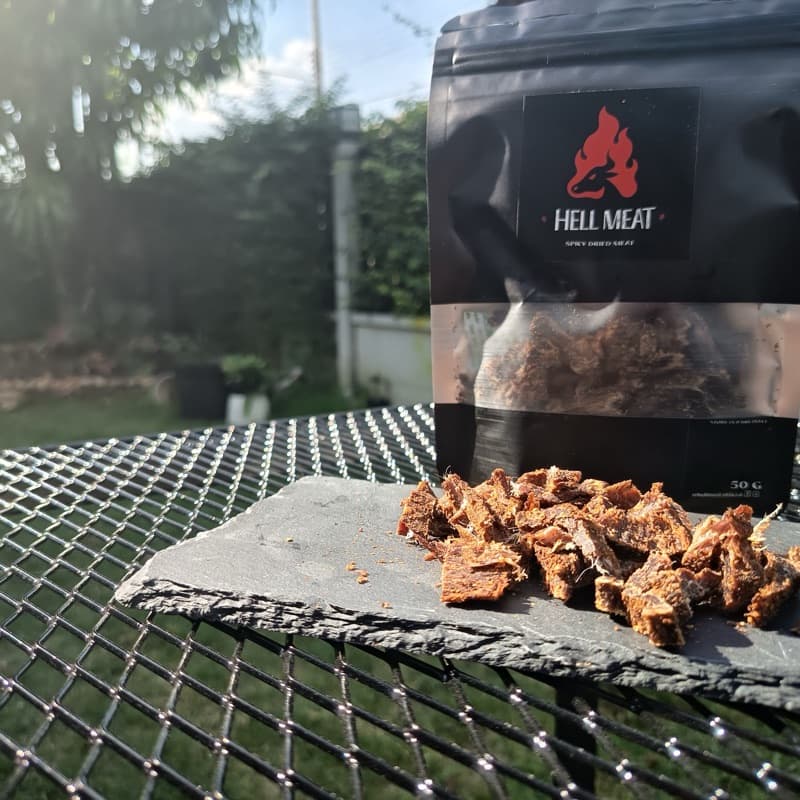
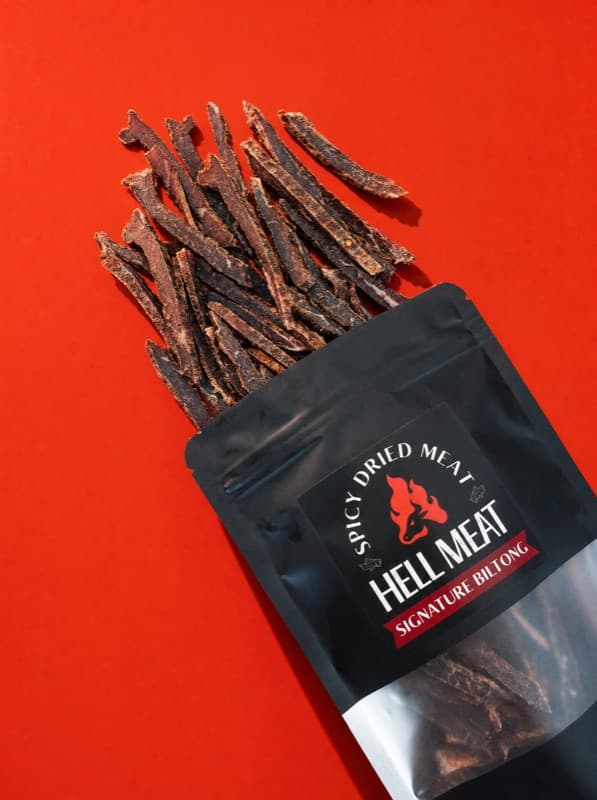
An unopened Hell Meat pack is fine in a cool, dry cupboard until its date; you do not need to refrigerate it before opening. Once it is open and exposed to Thai air, the clock speeds up, and the fridge or freezer becomes your friend.
Everyday storage, step by step
For biltong you are working through over a week or two, a simple routine keeps it perfect.
Opened packs at room temperature
Move the biltong to a paper bag or a loosely closed container. The goal is to keep dust off while still letting a little air move. A fully airtight plastic bag traps whatever moisture the meat gives off, and that trapped moisture is what causes trouble. Eat it within a few days in a hot kitchen.
Using the fridge
The fridge is the easiest way to buy more time in Thailand. Two tips make it work better. Avoid a sealed plastic bag straight in the fridge; a paper bag, or a container with the lid resting rather than snapped shut, lets condensation escape. And let refrigerated biltong come back toward room temperature for a few minutes before eating, so the flavor and aroma open up.
Freezing for the long haul
Biltong freezes surprisingly well. Portion it into serving-sized amounts first so you only thaw what you will eat, wrap it well to guard against freezer burn, and defrost in the fridge rather than on a warm counter. The texture holds up, and you avoid refreezing.
How to tell if biltong has turned
Cured beef gives you clear signals. Trust them over any printed date once a pack is open.
- Mold — any fuzzy white, green, or black growth means discard the piece; do not cut around it and do not taste it.
- Off or sour smell — good biltong smells of beef, vinegar, and spice; a sharp, sour, or ammonia-like note is a stop sign.
- Sticky or slimy surface — a slick, tacky film is a sign moisture has taken over.
- Unexpected sponginess — biltong is meant to be firm-to-chewy; if a dry piece has gone soft in storage, it has picked up humidity and is on its way out.
When any of these show up, throw the piece away. Good storage is how you avoid getting here.
Storing biltong on the move
One of biltong's best tricks is that it travels. Because the water is already gone and the meat is cured, it shrugs off a hot backpack far better than most snacks, which is exactly why it earns a spot in our guide to the best snacks for travel and hiking. On the road, keep it in a resealable bag pressed of excess air, and if you are out for several days, open the bag now and then to let any built-up moisture escape rather than leaving it sealed and sweating in the heat.
Storing biltong well is not complicated: keep it dry, give it airflow, stay out of the humidity, and lean on the fridge or freezer when you want to stretch the window. Do that and every piece tastes the way it should, firm, savory, and clean.
If your storage problem is really that a pack never survives long enough to need storing, that is the best kind of problem. Grab a pack of Peppery Jerky for the mild, everyday snack, or Signature Heat when you want the Carolina Reaper burn, and put these tips to the test.